Why Your Wedding Party Shouldn’t Be Responsible for Coordinating Your Wedding Day
Your best friend can hold your bouquet. She should not have to hold the entire wedding day together.

Most couples do not intentionally turn their wedding party or family members into unpaid coordinators. It usually happens one small assignment at a time.
One person is asked to keep the wedding morning on schedule. Someone else is given the vendor phone numbers. A parent is told where the décor belongs. The maid of honor is expected to locate missing people before photographs. A groomsman is asked to cue the ceremony music or tell everyone when it is time to line up.
Individually, each request may sound manageable.
Together, they create a coordination team made up of the very people who were invited to experience the wedding with you.
Helping Is Not the Same as Being Responsible
There is nothing wrong with asking someone close to you for reasonable help.
Your maid of honor may hold your bouquet, help with your bustle or make sure you have water nearby. A family member may bring a sentimental item to the venue. A member of the wedding party may participate in a meaningful cultural or family tradition.
Those are personal acts of care.
Coordination responsibility is different.
It means someone must understand the full plan, communicate with vendors, watch the timing, answer questions, notice what is missing and decide what should happen when the original plan changes.
That person is no longer simply supporting you. They are helping run the event.
Your loved ones may be willing to do that. Their willingness does not mean the responsibility belongs to them.
The “Few Small Things” Add Up Quickly
A wedding day contains dozens of decisions and transitions that guests may never notice when they are handled well.
Someone may need to:
Confirm that vendors arrived and know where to go
Check that ceremony and reception spaces match the approved plan
Keep the wedding party aware of timing without creating panic
Locate family members for photographs
Communicate a delay to several vendors at once
Adjust an outdoor transition because of weather
Confirm when guests should be invited into the next space
Cue the ceremony processional and formal reception moments
Answer questions about personal items, décor or deliveries
Solve a problem without immediately involving the couple
Keep the timeline moving while protecting important moments from feeling rushed
The challenge is not any single task.
The challenge is that several of them may happen at the same time.

Your mother cannot be fully present during family photographs if she is also responding to a vendor who needs a decision. Your maid of honor cannot calm your nerves before the ceremony if she is searching for a missing boutonnière. Your best friend cannot enjoy cocktail hour if she is checking the reception setup and watching the clock.
When no one has full ownership of the wedding-day plan, responsibility tends to land on whoever looks available, capable or familiar with the details.
That is often a parent, sibling or member of the wedding party.
A Venue Contact Is Not Always Your Personal Wedding Coordinator
Some venues provide an experienced venue manager or event contact. That person can be an important part of the vendor team—but their responsibilities are usually centered on the venue.
They may oversee access to the property, venue rules, included furnishings, staff responsibilities or building logistics.
Your wedding requires someone focused on the complete experience.
That may include coordinating with the photographer, entertainment, florist, caterer, transportation provider and wedding party; managing the couple’s personal items; tracking the ceremony and reception timeline; and communicating changes across several teams.
Before assuming the venue will manage everything, ask exactly what its staff will and will not handle.
Professional collaboration works best when every vendor understands their role and no critical responsibility is left sitting between them.
Your Wedding Party Should Be Making Memories
The people standing beside you were chosen because they matter to you.
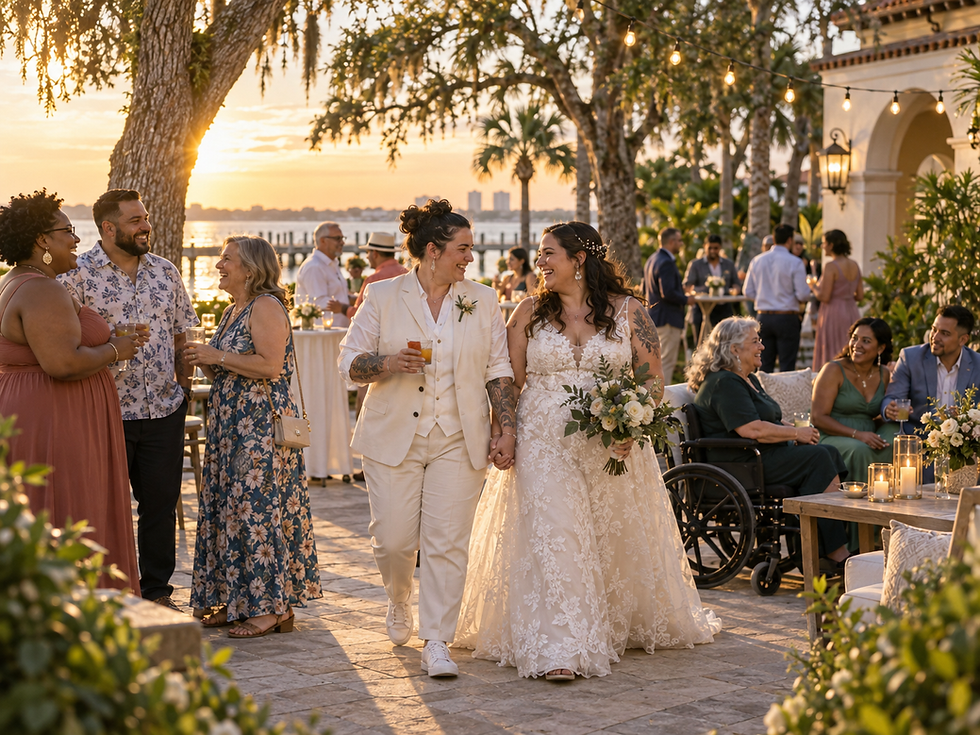
They should be able to help you breathe before the ceremony, react when you walk down the aisle, laugh through the photographs, listen to the speeches and join you on the dance floor.
Your family should be able to experience the wedding as family.
They should not have to spend the day wondering:
Is the florist here?
Who is lining everyone up?
Are we behind schedule?
Where does this box belong?
Has anyone told the photographer?
Who is moving the guests?
What happens next?

Professional coordination protects more than the schedule.
It protects people’s ability to remain emotionally present.
That includes the couple, their families, their wedding party and the guests who came to celebrate with them.
Wedding Management Begins Before the Wedding Day
Effective Wedding Management is not simply showing up on the morning of the wedding with a clipboard.
Ever After Unscripted begins Wedding Management approximately eight weeks before the wedding date.
That time allows us to become familiar with the plans already made, review the moving pieces, identify unanswered logistical questions, communicate with the vendor team and build the structure needed for intentional execution.
The purpose is not to take credit for the wedding you planned.
It is to make sure the plans you created can be carried out without requiring you—or the people closest to you—to manage the event from inside it.
By the time the wedding day arrives, there should be a professional who understands the timeline, knows who is responsible for each transition and can respond when reality does not follow the document perfectly.
Because it rarely does.
Let Your Wedding Party Be Your Wedding Party
Your people can support you without becoming responsible for whether the wedding runs correctly.
They can participate in meaningful tasks without managing vendors, timing and troubleshooting.
They can stand beside you without carrying the event behind the scenes.
That is the difference professional coordination can make.
You have spent months making decisions about your wedding. The final phase should give those decisions an experienced home—and give the people you love permission to be present.
Planning most of the wedding yourself, but realizing someone still needs to manage the final details, vendor communication, timeline and wedding-day execution?
Explore Ever After Unscripted’s Wedding Management service and book your consultation.
Tradition optional. Execution intentional. Presence protected.


Comments