How to Make Traditional Wedding Elements Feel More Personal
Not every couple wants to throw out tradition completely.
And honestly? You do not have to.
A lot of modern couples are not looking for a wedding that is fully traditional or fully untraditional. They are looking for something much more nuanced than that. They want a wedding that keeps the parts that matter, leaves behind the parts that do not, and reshapes familiar moments so they feel personal instead of performative.
That is usually where the best weddings live.
Because the issue is rarely tradition itself. The issue is when tradition is used without intention.
Traditional wedding elements can be beautiful. Emotional. Grounding. Symbolic. They can connect families, create continuity, and give structure to the day. But if a tradition does not fit your relationship, your values, your family dynamic, or your actual personality, it can start to feel borrowed instead of meaningful.
The fix is not always removing the tradition. Sometimes it is simply reworking it.
Take the processional, for example. A lot of couples assume there are only two options: do it the standard way or skip it entirely. But there is so much room in between. You can walk together. You can have both parents escort you. You can have a sibling, grandparent, child, or chosen family member be part of that moment. You can shift the order, change the music, or remove the “giving away” language while still honoring the emotional significance of the entrance.

The same goes for vows. If traditional vows matter to you, keep them. But maybe you add private vows beforehand. Or a letter exchange. Or one intentional sentence during the ceremony that is fully your own. It does not have to be either/or.
First dances are another area couples overthink. A first dance does not have to be a long, awkward spotlight moment if that is not your thing. It can be shortened. It can begin traditionally and then open the floor sooner. It can be choreographed, casual, playful, intimate, or folded into a broader reception moment that feels less staged.
Parent dances can be personalized too. Maybe you keep one and not both. Maybe you invite multiple family members halfway through. Maybe you swap the format entirely for a family blessing, a toast, or a shared moment that better reflects the relationship.
Even your ceremony structure can be personalized without losing its emotional weight. You can include cultural or religious elements selectively. You can revise readings so they sound like you. You can invite a friend to officiate while still preserving a formal tone. You can blend modern and traditional wording instead of choosing one extreme.
One of the best ways to personalize traditional elements is to ask one very simple question:
What is this moment supposed to communicate?
If the answer is “honor,” keep the heart of it and change the format if needed. If the answer is “connection,” ask what version of the moment would actually create that. If the answer is “because weddings are supposed to have that,” that is your sign to rethink it.
The same principle applies to visual traditions.
A classic white cake can still feel personal if the design reflects your actual style. A seated dinner can feel less formal and more intimate depending on layout, lighting, menu pacing, and table design. A bouquet toss can become a private anniversary dance. A guest book can become audio messages, letters, custom cards, or something guests will actually engage with.
Personalization is not about making the wedding more random. It is about making the choices more aligned.
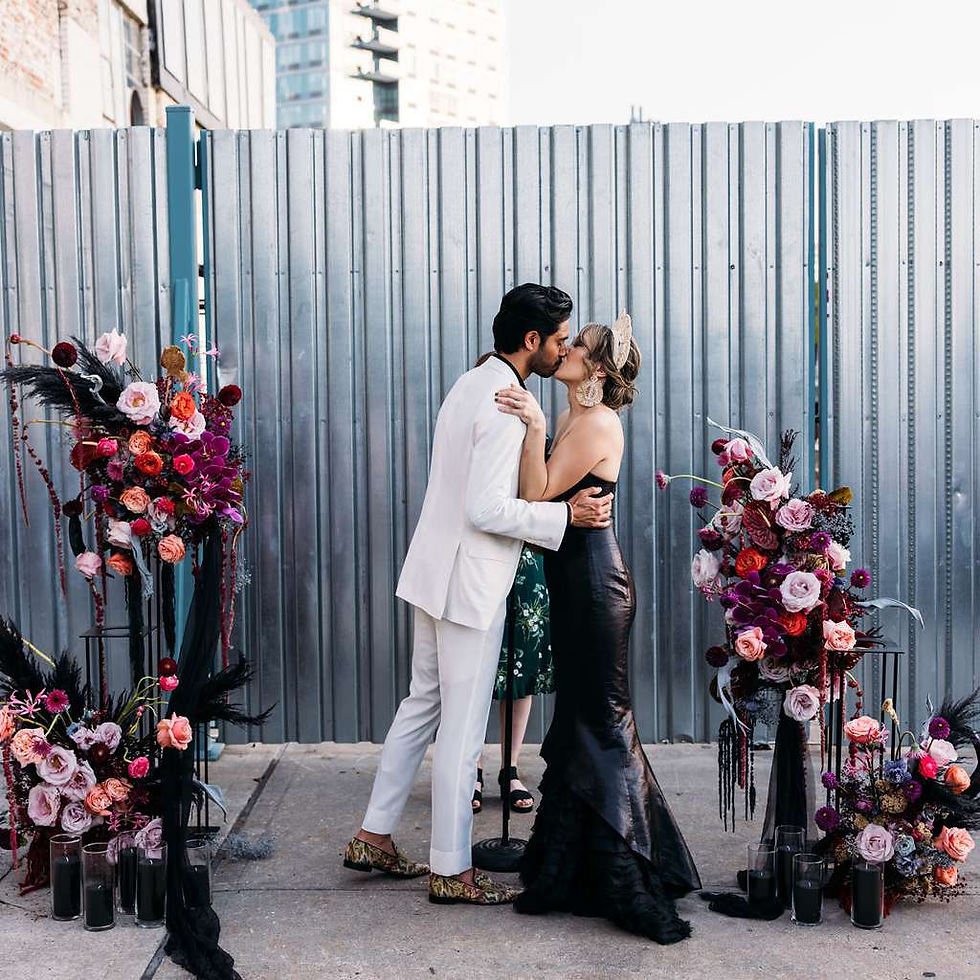
This is also where couples sometimes get trapped by outside expectations. Family members often respond more strongly to traditions than the couple does, because they associate them with meaning, memory, or familiarity. That does not automatically mean you should keep every tradition unchanged. But it does mean the conversation benefits from thoughtfulness.
Instead of saying, “We’re not doing that because it’s outdated,” you may get farther by saying, “We want to keep the heart of that moment, but make it feel more like us.”
That approach tends to land better, and it is usually more accurate anyway.
The most memorable weddings are not the ones that reject every tradition. They are the ones that choose intentionally. Some couples keep a classic ceremony and throw out the formal reception structure. Some keep family traditions and modernize the aesthetic. Some keep almost everything traditional, but make the language, music, and guest experience deeply personal.
That is still personalization.
Because a wedding does not become meaningful by being unusual. It becomes meaningful by being honest.
You do not have to choose between traditional and personal. The best weddings usually take what matters, reshape what doesn’t, and create a version of the day that actually sounds like the people getting married.


Comments