Florida Wedding Timeline Mistakes to Avoid
A wedding timeline can look perfectly reasonable on paper and still fall apart in real life.
This happens all the time in Florida.
Couples build timelines based on Pinterest, generic planning templates, or what worked for a friend in another state, and then wonder why the day feels rushed, overheated, delayed, or strangely out of sync. Florida weddings have their own rhythm. Between heat, humidity, weather changes, travel patterns, venue logistics, and seasonal unpredictability, the timeline has to do more than just move from point A to point B.
It has to protect the experience.
One of the biggest timeline mistakes Florida couples make is planning outdoor moments too early in the day. A ceremony at 1:00 or 2:00 p.m. may look efficient on paper, but in many parts of Florida, that can mean harsh sun, uncomfortable guests, sweating, squinting, and photos that feel harder than they should. If you are planning in Sarasota, Tampa, or anywhere nearby, sunlight, heat, and comfort need to be part of the timeline conversation from the beginning.
Another common mistake is underestimating weather backup planning. Florida weather is famous for changing quickly, and your timeline has to account for that reality. Even when the forecast looks fine, you still need clarity around who makes the call, when the backup decision happens, how guests will be directed, and what changes operationally if the plan shifts. That is not negativity. That is professionalism.
And then there is hurricane season. The National Hurricane Center states that the Atlantic hurricane season runs from June 1 through November 30. That does not mean every wedding in that window is doomed. It means couples planning during those months should build more flexibility into guest communication, travel expectations, and contingency planning.
A third major mistake is not allowing enough transition time between events.
Ceremony to cocktail hour. Cocktail hour to reception. Toasts to dinner service. Dinner to dancing. These shifts matter. If they are too tight, the whole day feels like a sprint. If they are too loose, the energy drops and guests start to feel unmoored.
This is especially important for weddings with transportation involved. If guests are moving from hotel to ceremony site, or from ceremony to reception, your timeline needs real-world buffer time, not ideal-world travel time. Florida traffic, parking, valet queues, elevator waits, and guest wrangling can steal more minutes than couples expect.

Photography timing is another place where timelines often get sabotaged.
Couples frequently underestimate how long portraits, family photos, or detail shots actually take. Then they end up racing through the most emotionally meaningful parts of the day because the earlier sections were packed too tightly. Good photography needs margin. Not endless margin, but enough to work without turning every portrait into a speed round.
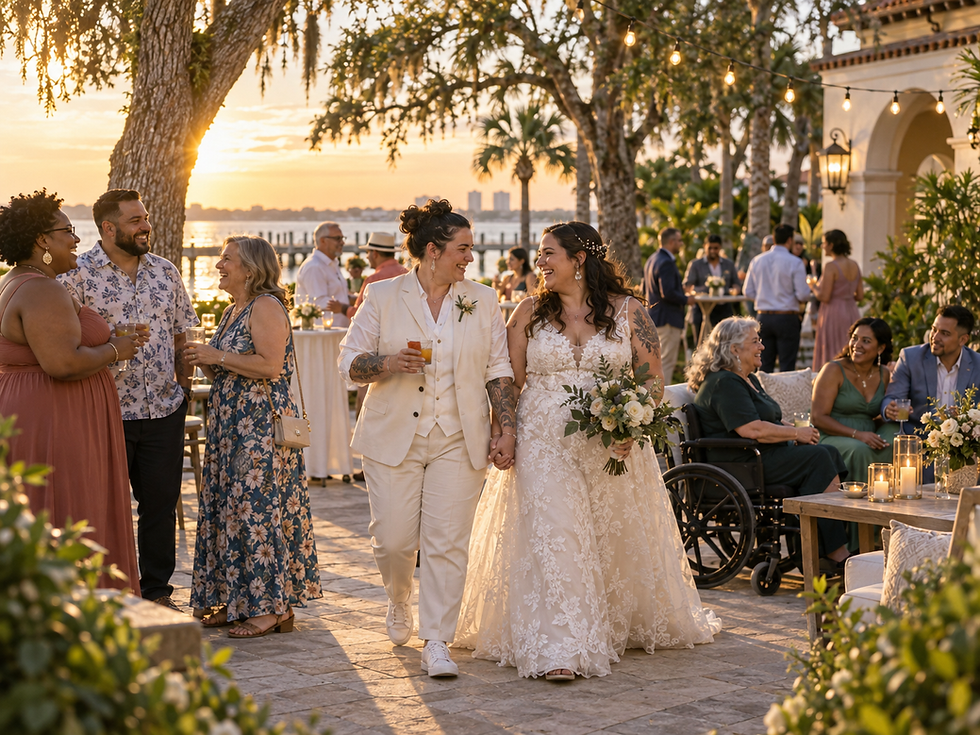
Sunset matters too, especially for outdoor ceremonies, waterfront weddings, and rooftop receptions. If the golden light is one of the reasons you chose your venue, your timeline should reflect that. Do not spend money on a beautiful Florida backdrop only to place all your portraits in the worst lighting window of the day.
Another mistake: stacking too many formalities back-to-back.
Guests do not need to sit through grand entrance, first dance, parent dances, welcome speech, blessing, dinner release, and three toasts in one long block with no flow. That is not elegant. That is exhausting. A strong timeline spaces things out so the reception breathes and guests can actually enjoy being there.
The same goes for getting-ready schedules. Hair and makeup delays are one of the easiest ways for the entire day to start behind. If the prep schedule is too optimistic, everything after it tightens up. Build in cushion. People need time to dress, breathe, eat something, find shoes, steam a shirt, pin a boutonniere, and have at least one non-chaotic moment before the ceremony.
One more issue that shows up constantly: couples not assigning a real point person.
A timeline is only as useful as the person enforcing it. If no one is responsible for checking on vendors, cueing key people, adjusting when things shift, and communicating calmly when timing changes, the timeline becomes more of a suggestion than a plan. That is why coordination matters so much. A timeline should not live only on paper. It should be actively managed.
The goal of a wedding timeline is not to schedule every breath. It is to protect the day from preventable stress. The best timelines create room for real life. They account for heat, movement, emotions, setup delays, photo needs, and the human reality of weddings.
Because here is the truth: guests do not remember whether cocktail hour started seven minutes late. They remember whether the day felt smooth. You remember whether you felt present. That is what a great timeline is really for.
If you’re planning a Florida wedding, your timeline should do more than keep the day moving. It should protect the atmosphere, the guest experience, and your ability to actually enjoy getting married.


Comments